




Irrigation
Have an urgent issue?
Call our Total Service Hotline at 888-BeAdept (232-3378).
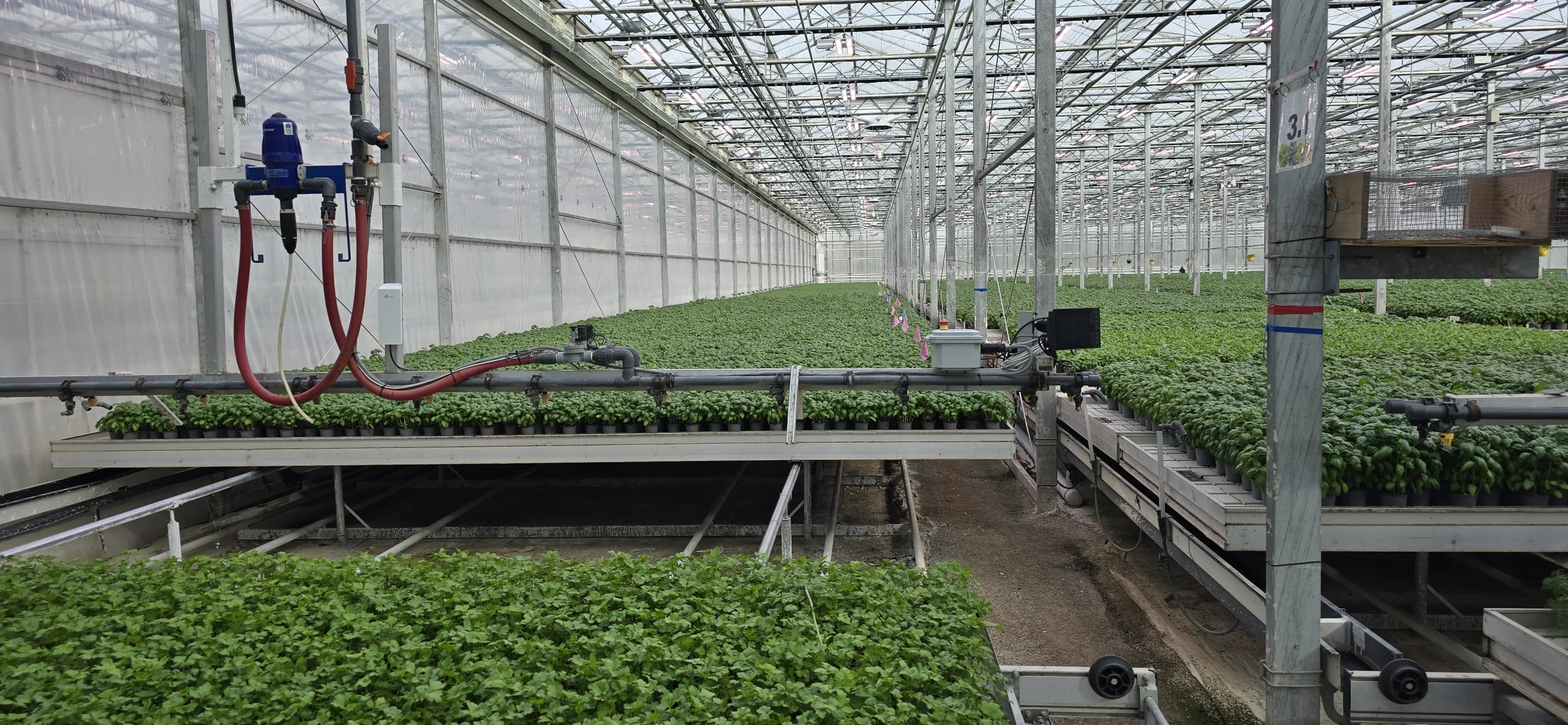
For decades, DC motors were the standard way to run irrigation booms, and many are still doing the job well today. But as AC motors and drives have become more affordable and widely available, the industry is gradually moving toward AC. The shift brings more consistent boom speeds, easier access to parts, and a better connection to modern greenhouse controls.
For the last 35 years, DC was simply the cheaper way to control speed. DC motors were inexpensive, and running them at a variable speed was easy.
The trade-off was consistency. Speed could vary from one motor to the next, and the industry accepted that as the cost of doing business.
AC motors paired with variable frequency drives started showing up in the late 1990s, but they were expensive. Andrew Van Geest, Technical Irrigation Lead at AdeptAg, compares it to flat-screen TVs: they cost a fortune when they first came out, and now they’re everywhere and affordable. AC drives followed the same path. As more industries adopted them, prices came down.
The short answer is parts. As AC took over, the DC market started fading out.
“You have less vendors making that equipment,” Andrew says. “The ones that are left are raising the prices until the sales don’t make sense anymore, and they won’t be carrying them either.”
Some DC components are still out there. If a grower wants to replace a controller with the same one they had, that can still work for now. “But those days are numbered,” Andrew says.
This change is happening across the whole industry, not just with one supplier. At AdeptAg, we talk with about 10 growers a week about moving from DC to AC, and other boom manufacturers are having the same conversations with their customers
Not in a way you’ll see overnight. The real difference is confidence that your settings mean the same thing on every boom.
“When you select 20% speed on an AC motor, it will be the same speed on every boom. Twenty percent will truly be 20%,” Andrew says. On DC, the actual speed can swing 3 to 5% from the setting.
For growers running a range full of booms, that means the same program delivers the same result in every bay.
DC motors have brushes that need changing, or eventually the whole motor gets replaced. Andrew calls that general maintenance, not a real problem. The bigger issue isn’t the wear. It’s finding and paying for the replacement parts as DC supply dries up.
In most cases, it’s more than swapping a motor. A boom’s drive system has three parts:
The controller is built for either DC or AC, not both. The DC controller sends signals to the DC control box, so moving to AC means replacing all three. The good news is that the boom itself, the frame, rail and mechanics, usually stays.
If your DC booms are running fine, you don’t have to change anything today. But it’s worth planning before a failure makes the decision for you.
Here’s the approach Andrew sees working:
Beyond parts and consistency, AC opens the door to tighter integration with the rest of the greenhouse. Newer boom controllers can tie into environmental control computers, which makes it possible to:
Running DC booms and not sure where to start? Talk to your local rep to help you get started.

